
How to Read Violin Music for Beginners
What This Page Covers
These reading exercises are companion resources for my free beginner violin course. They are designed to be used alongside the matching lessons and videos rather than as random, stand-alone worksheets.
Learn to Read Violin Music Step by Step
Reading violin music becomes much easier when you learn it
gradually.
We begin with the four open strings, then introduce the
fingers one stage at a time. This helps you connect the notes
you see on the stave with the string and finger you actually
play on the violin.
The exercises on this page follow the same order as Lessons
5–8 of the free course, so each new stage builds directly on
what you have already learned.
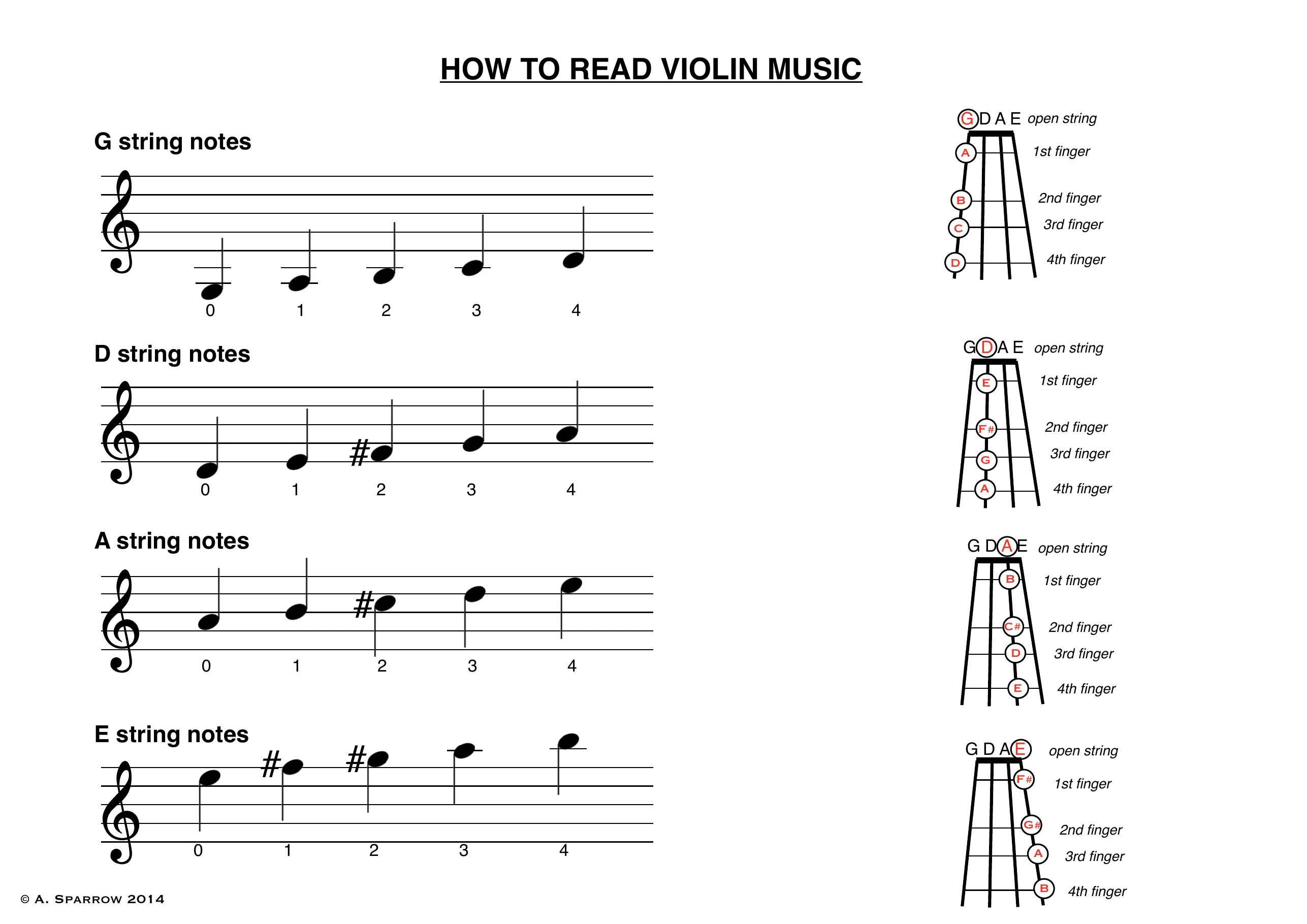
How to Read Violin Notes
This guide shows you how written notes on the stave relate to the violin fingerboard. As a beginner, the important thing is not to memorise everything at once, but to start seeing the connection between the note on the page, the string you play on, and the finger you use.
On the violin, each string has its own set of notes. The same finger number does not always mean the same note, because it depends which string you are playing on.
- 0 = open string, which means no finger is pressed down.
- 1st finger = your first finger goes down on the string to raise the pitch.
- 2nd finger = the next note up, once the second finger is added.
- 3rd finger = the next step higher again.
- 4th finger = your little finger, used for the highest note in this beginner pattern.